
...but those who hope in the Lord will renew their strength. They will soar on wings like eagles; They will run and not grow weary, they will walk and not be faint.
ISAIAH 40:31

A Blog for Kids and Everyone.

This is a journey through God's word. The Bible is so amazing! There are a lot of great stories. Some that we know well and some will surprise us. We will have a lot of fun as we color, watch short cartoons and tell funny stories.
Showing posts with label blessing. Show all posts

Thursday, January 27, 2022

Faithfulness: God's desire from us (Jeremiah 38:7 -52)

 When we left Jeremiah last time, he was sitting at the bottom of a muddy well, left for dead. But God........still had more for Jeremiah to do. God touched the heart of one of the king's servants, an Ethiopian named Ebed-Melech. The servant took his own life in his hands by telling the king that allowing Jeremiah to be thrown into the well to die was wrong. Instead of killing Ebed-Melech, the king had a change of heart and told the young Ethiopian to gather some men and pull Jeremiah out of the well.

Sometimes saying the right thing, or telling the hard truth is not easy. God says to do the right thing, not the easy thing. Just as Ebed-Melech risked his life, sometimes we have to risk being made fun of or losing friends. But know this. We always have God on our side when we do right.

So Jeremiah was saved..... well sort of. The king had Jeremiah brought before him. "Tell me what you know!" He ordered. Jeremiah was concerned that if he told him the truth, the king would have him killed anyway. But the king promised that he would not have Jeremiah killed if he told him the truth. So Jeremiah told the king that Babylon would soon attack Jerusalem, but that he should surrender peacefully to them or some bad stuff would happen to the king's family as well as to the king himself. The king was not happy with what Jeremiah said, but he had promised not to kill him, so he had Jeremiah tossed into dungeon.... again.

While Jeremiah was imprisoned, Jerusalem was taken over by the Babylonians, (just as God said) and the king of Judah didn't listen to what God said through Jeremiah. And remember what God told Jeremiah to tell the king... Some bad stuff would happen? Well the king tried to flee the city during the take over. He was caught and his eyes were gouged out! Also his wife and kids were killed in the palace when it was set on fire.

Even though Jeremiah was taken to Babylon during the siege, God protected him. Nebuchadnezzar, the king of Babylon set Jeremiah free to live in Babylon. Jeremiah was even given food and some gifts to help him settle in. Since Jeremiah was a prisoner of Judah, and the king of Judah was an enemy of Babylon, Nebuchadnezzar showed kindness to Jeremiah. So I guess getting thrown into prison again turned out pretty well for Jeremiah.
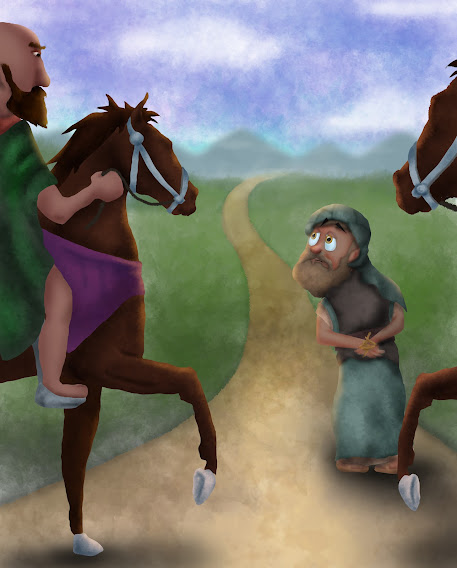
Sometimes things don't work out like we planned. I'm sure Jeremiah didn't want to be pulled from a well, just to get tossed into a dungeon. God sees all things. We need to trust Him. Have you ever had something go the wrong way, only to find out later that it was absolutely for the best? I have.

When Jerusalem was taken over by the Babylonians, a lot of the Jews were taken captive, however, the poorest Jews were left behind and a small governmental system was put in place. Many of the Jews saw that the fighting was over and returned to Judah. The Jews that fled to Egypt however, found life very comfortable there and decided not to return. 

Jeremiah returned to Judah with a word for the people. He said that the people in Egypt should return as well. That Egypt would soon fall to Babylon just like Judah did. He said that the Jews that have remained in Egypt are now worshipping false gods. God said that He would pass judgement upon them and anyone else who is worshipping idols. Some of the new leaders did not like Jeremiah and what he was saying. So they captured Jeremiah and took him to Egypt.

While in Egypt, Jeremiah faithfully continued to speak the words that God had put in his mouth. The final 5 chapters of the Book of Jeremiah tell of God's judgement on Egypt, Moab, Philistine and neighboring countries. Jeremiah is not mentioned again in these final chapters. Some say he was killed, others say he escaped Egypt. No one really knows for sure.

So even though Jeremiah spent his whole life trying to get his people to turn from their sin and to turn toward God, the people never listened. The outcome was not in Jeremiah's hands. He simply did what the Lord asked him to do. That is called faithfulness. God delights in our faithfulness. We don't have to "save the world". That is God's job. All we have to do is obey Him, and leave the consequences to Him. If you tell someone about Jesus and they accept Him as their savior, God did that, not you. To Him be the glory! And on the same note, if the person you shared Christ with rejects the message, it's not on you. You did what God asked. Leave the rest to Him.

Thursday, January 9, 2020

Ecclesiastes Part 1 (Chapters 1-6)

  Well we have reached the 21st book of the Bible, Ecclesiastes. In Hebrew, the word ecclesiastes means to preach. It was written about 975 years before Jesus was born, by King Solomon.  It was written near the end of King Solomon's reign as king of Israel. If you remember from our journey through the Book of 1 Kings, he was given great wisdom at the beginning of his reign. But now, at the end of his regime he has accumulated years of experience. He has written down his observations in this book.... and it may not be what you'd expect.
 Have you ever won a game that you are playing with one or more of your friends? It feels good, right? At that moment you feel the rush of victorious joy, but a few hours later, it doesn't much matter who won. You have to play and win again to feel that same feeling. Then, if you win every time, even that feeling wears down nothing. Why is that? Well King Solomon, the wisest and richest man ever, tackles that very question plus a few more. And who better than the man who could have anything, do anything or command anything to share his quest for "the meaning of life."
 Basically the book of Ecclesiastes talks about the frustrations, futility and unanswered questions of life, then the teacher (King Solomon) wraps it all up in the very last paragraph by encouraging us to live a God-centered life. We will go through the first six chapters in this post and the last six chapters in the next post. I just wanted to let you know ahead of time that there is a light at the end of the eccliasastical tunnel.:)
 The teacher begins the book and chapter 1 by saying that everything is meaningless. He points out the monotony of nature, instead of God's incredible creation (Psalm 95:4-5). Then he points out how useless it is for men to work, instead of how work is a God-ordained blessing (John 5:17) He ends the first chapter talking about how being wise and searching for wisdom amounts to nothing.When God clearly says that wisdom is a gift from Him to glorify Him (James 3:17)
 In chapter 2, the teacher starts off by saying that enjoying life and laughter is totally futile. He built parks and vineyards and large houses, but it was all just a waste of time and resources. But God says in his word that He has made this day, everything good in it is a gift, and we should rejoice in it.(James1:17) (Psalm118:24) Then in chapter 2 he also repeats the fact that wisdom and work are meaningless.
 Chapter 3 starts off with a beautiful poem (it was even made into a song by the Byrds in 1965) then the teacher continues by acknowledging God's purpose and living our lives in the light of eternity.
1For everything there is a season,
a time for every activity under heaven.
2A time to be born and a time to die.
A time to plant and a time to harvest.
3A time to kill and a time to heal.
A time to tear down and a time to build up.
4A time to cry and a time to laugh.
A time to grieve and a time to dance.
5A time to scatter stones and a time to gather stones.
A time to embrace and a time to turn away.
6A time to search and a time to quit searching.
A time to keep and a time to throw away.
7A time to tear and a time to mend.
A time to be quiet and a time to speak.
8A time to love and a time to hate.
A time for war and a time for peace.
9What do people really get for all their hard work? 10I have seen the burden God has placed on us all. 11Yet God has made everything beautiful for its own time. He has planted eternity in the human heart, but even so, people cannot see the whole scope of God’s work from beginning to end. 12So I concluded there is nothing better than to be happy and enjoy ourselves as long as we can. 13And people should eat and drink and enjoy the fruits of their labor, for these are gifts from God.
14And I know that whatever God does is final. Nothing can be added to it or taken from it. God’s purpose is that people should fear him. 15What is happening now has happened before, and what will happen in the future has happened before, because God makes the same things happen over and over again.
  Then the teacher returns to the negative script and talks about how life is not fair. Well he is right about that. Sin is in our world. Bad things happen to good people, but God promises to never leave our side.(Deuteronomy 31:8)
   The teacher continues about the unfairness of life in Chapter 4, Then he adds a positive side note. He says that two people together can get more done together than they can seperately. If one falls, the other is there to help him get up. If a man falls alone, he is in trouble. Then he states the fact that three are even better. "A chord of three strands is not easily broken." (vs. 11) Then as a king, he says that he sees the futility of political power. God tells us to pray for our leaders and that He has placed them there for His purpose.(Romans 13:1)
  Chapter 5 begins with an exhortation to approach God with reverence. And if we make any promises to God, keep them, and keep them as quickly as possible. For it is better to say nothing, than to make a promise to Him and not keep it.(vs 5) He finishes up the chapter talking about how useless it is to be wealthy. God talks about money a lot in the Bible. Wealth is not useless and money is not bad according to God. Wealthy people who give to bring God glory can bless so many people.(Matthew 6:21) But we don't have to be wealthy to give. God can use a little to accomplish much. And it doesn't just have to be money. It could be our time and our talents as well.
 In chapter 6 the teacher talks some more about being rich verses being poor. He says that t both rich and poor get sick and they both die, the only difference is that the rich man leaves more behind that he never got the chance to enjoy. God tells us through Paul to be content whether rich or poor because God gives us the strength to live a fulfilled life in Him. (Philippians 4:12-13)

          Thanks to Phil Vischer (creator of Veggie Tales) for this clip from whatsinthebible.com


Saturday, October 5, 2019

Proverbs Pt. 2

We will look at a few more proverbs. Remember what we said about the Book of Proverbs? The main purpose is to teach wisdom to God’s people. Proverbs are short clever explanations, which are easy to remember. They contain truisms. These are things which are typically true however, not always. They deal with life, principles, good judgment, and perception. They often draw distinctions between a wise man and a foolish man with parable type examples.


                                                        Proverbs 1:17
                                The bird see a trap and goes the other way,
                                A greedy man sets a trap, then gets caught
                                in it himself.
In other words, the deeds that go along with being greedy are actually self-destructive.


                                                       Proverbs 17:12
                                Trying to rob a mama bear of her cubs is safer
                                than confronting a fool caught in his own folly.
In other words, pointing out a stupid mistake to someone is not a very good idea.


                                                        Proverbs 24:16
                                A Godly man may trip 7 times, but he always gets up.
                                Just one trip-up and the ungodly man is down and out.
In other words, When God is on our side, we see obstacles as opportunities and brush ourselves off and try again, but the person that doesn't know God, gets totally discouraged after one failure and gives up.


                                                        Proverbs 26:17
                                Yanking a dog's ears is as foolish as interfering 
                                in someone else's argument.  
In other words, When we get in the middle of two people arguing, we could be the one that ends up getting "bit." The Bible does say "Blessed are the peace makers", but it does not say blessed are the peace keepers. 

Next time we will be reading another book written by King Solomon called "Ecclesiastes".


Friday, September 20, 2019

Proverbs

The book of Proverbs (known as the proverbs of Solomon) was in fact written by Solomon, However, some of the proverbs that have been collected by Solomon are included in the book. In his lifetime, Solomon wrote 3,000 proverbs and 1000 songs.

 Proverbs is different from other books of the Bible because it is filled with two or three line individual statements, not organized by topic. They teach wisdom through short points. They are not Biblical promises, but rather principals to guide us in our relationship with God and others. The word wisdom shows up 114 times in 31 chapters. The wise man is contrasted with the fool throughout the book.

 So what is wisdom? Or who is the wise person? Wisdom is seeing the world and all that goes on, as God sees it and basing our reactions to any situation from God's perspective. So a wise person is one who knows God, sees the world through His eyes, and acts accordingly.

 Provers 1:2 tells us "The purpose of proverbs is to teach people wisdom and discipline, and to help them understand wise sayings. And verse 3 says, Through these proverbs, people will receive instruction in discipline, good conduct, and doing what is right, just, and fair.

  We can't go through every proverb, so I will pick out 6 proverbs that I think you will learn from and enjoy the pictures. The first one is Proverbs 6:6-7.

       Take a lesson from the ants and be wise. Even though they have no
       leader,  still they work all summer to gather food for the winter.

 In other words, even when no one is in charge. Don't be lazy.... be smart.

 And here is another one. Proverbs 11:22

       A woman who is beautiful but lacks good sense is like a gold ring in a pig's snout.

 In other words, beauty may be on the outside..... but inner beauty is what God sees.

There are 31 one chapters in proverbs, just like days in the month. Some people read a chapter a day for a month because getting God's word past our brains and into our hearts takes repetition and diligence.

 Next time we will see the wisdom in 4 more proverbs.

Thursday, July 18, 2019

Psalms 98, 114 and 139

There are many example of different types of Psalms. Here are three.

Psalm 114:
A Psalm of remembrance. It is good for us to remember the amazing things that God has done in the past. This Psalm depicts the time God rescued the Israelites by parting the Red Sea. God wants us to remember these biblical stories, but also to remember the times God has been there for us. Stop right now and think of when God protected you, comforted you and made a way for you. It is good to just stop and remember these things because it grows our faith and it draws us nearer to the Provider, Comforter and Protector.

                                                        Psalm 114:1-4
          When the Israelites escaped from Egypt, when the family of Jacob left that 
          foreign land, the land of Judah became God's sanctuary, and Israel His kingdom.
         The Red Sea saw them coming and hurried out of their way! The water of the
         Jordan River turned away. The mountains skipped like rams, the hills like sheep.


Psalm 98:
A Psalm of praise. Did you ever hear the birds singing? did you ever thing that their song is a song of praise to God? If the little birdies can sing praises to the Lord, what should prevent us from doing the same. Psalm 22 says that "God inhabits the praises of His people". Which means God lives in our praise! If you want to be closer to God.... praise Him.... sing to Him. He loves it!


                                                       Psalm 98:4-8
          Shout for joy to the Lord, all the earth, burst into jubilant song with music.
          Make music to the Lord with the harp, with the harp and the sound of singing.
          With trumpets and the blast of a ram's horn, Shout for joy to the Lord, the King.
          Let the sea resound, and everything in it, the world, and all that live in it.

Psalm 139:
A Psalm of thanksgiving. Nothing in this life is guaranteed. God is the provider of everything, including our next breath. God was there at the beginning. (While we were still in our mom's tummy) He created us with a purpose. He knows everything about us... and He STILL loves us! There is so much to thank God for. We can use the thanksgiving Psalms to show our gratiude for His love, His provision, His protection etc....

                                                       Psalm 139:13-18
                        You made all the delicate , inner parts of my body and 
                        knit me together in my mother's womb.
                        Thank you for making me so wonderfully complex!
                        Your workmanship is marvelous. How well I know it.
                        You watched me as I was being formed in seclusion,
                        as I was woven together in the dark of the womb.
                        You saw me before I was born. Every day of my life
                        was recorded in your book. Every moment was laid
                        out before a single day had passed.


Thursday, July 11, 2019

The book of Psalms

We can't illustrate every Psalm, so we are going to pick a few to draw and give an overview of the whole book by asking questions, and answering them.

 (1)Who wrote the Book of Psalms?
 The Book of Psalms was written by Moses, King David, Heman, Ethan, King Solomon, Asaph and the son's of Korah. So a lot of people were involved. Although King David wrote almost half of the Psalms.... and there are a few that we don't know who wrote them. What is nice is that, a lot of the Psalms give the author and a brief story of what was happening, and the significance of each one.

(2) How many years did it take to write the Book of Psalms?
 Believe it or not, Psalms was written over a span of nearly1000 years! From 1440 B.C. (during the time of Moses) to 586 B.C. The Psalms cover most of Israels history. (While they were in Egypt, when they escaped into the wilderness, and during the reign of their judges and kings, until the time of their captivity by the Babylonians.

(3) What is the purpose of the Book of Psalms?
 In the New testament, Psalms is referred to many times. It was and is considered a book of wisdom, teaching about God and getting to know God personally. It was actually written in song form. So, many of the Psalms read like poems, with stanzas, alliteration and rhyming. However, since they were translated from Jewish, they lost some of their rhythm.

(4) How are the Psalms applicable to me?
 The Book of Psalms are so full of prayers for many situations. We can read the Psalms from our own perspective and pray them back to God. (By the way, He loves when we pray His words back to Him) The Psalms express a wide range of emotions, from Joy, hope, trust, gratitude and praise, to despair, fear, and sorrow. We can use the Psalms to pray, worship, confess and praise God.

So as we mentioned in question/answer #3, Psalms teach us. What are some of the things that we
can learn from the Book of Psalms.
(A) It's OK to express how we feel to God, whether positive or negative.
(B) God cares for each of us. The Psalms reinforce our understanding of His love.
(C) The Psalms teach us that serving God and doing right is worth it.
(D) Some Psalms like Psalm 22 point to the coming of Jesus. So we can trust them.
(E) We learn what God desires from us in prayer and worship.

                                               PSALM 23
                                          a Psalm of David

The Lord is my shepherd; I shall not want.
He makes me lie down in green pastures.
He leads me beside still waters. He restores my soul.
He leads me in paths of righteousness for His name's sake.

Even tho I walk through the valley of the shadow of death,
I will fear no evil, for you are with me.
Your rod and staff, they comfort me.

You prepare a table for me in the presence of my enemies.
You anoint my head with oil; my cup overflows.
Surely goodness and mercy shall follow me all the days of my life,
and I will dwell in the house of the Lord forever. .

Monday, January 21, 2019

More Pain and Suffering for Job (Job 2)

 Once again the angels came to present themselves before the LORD..... and once again Satan was there as well. Satan told God that he was continuing to move across the earth, checking things out.
  "Well, you must have seen that Job, the man you tested, has still not sinned, even though I allowed you to do some terrible things to his property and his family." God said.
  "Of course he didn't curse you or sin against you!" Satan retorted. "You have protected him from harm. A man would gladly trade everything he has as long as he is safe and in good health." Satan continued, "If you let me inflict his body with some disease or malady..... then I'm sure he will curse you and turn his back on you!"
  "Job is upright and blameless. He fears God and shuns evil. I will let you do what you have said, however, do not kill him." God responded.
 So Satan went out from the presence of the LORD, and struck Job with painful boils from his toes to the top of his head. Job was in such intense pain that he went and sat on the ashes at a garbage dump. He found something and began scraping his skin because the boils were so itchy.

 How would you respond if you were Job? Of course we all feel like there are times when everything seems to be hitting us all at once. In Job's case, it really was! There are many choices we can make when facing the difficulties of life. 1. We can feel sorry for ourselves. 2. We can get angry at the situation, people around us, or God. 3. We can throw our hands up in the air and give up. 4. We can trust God (Proverbs 30:5), know that He loves us (1 John 3:1), and that He would never leave us (Deuteronomy 31:6). 

Job chose to trust God. He knew that God loved him and that God would not leave him. Job's wife on the other hand chose differently. We cannot be too hard on Job's wife though. Remember, she too lost all her possessions and her children.  Now she was watching her husband suffering right in front of her! So I can understand her response to Job's pain when she said to him, "Job! Are you still clinging to your integrity? Enough is enough! Just curse God and die!"
  Job answered his wife,  "My dear wife, you are  foolishly speaking out of anger and fear. Are we supposed to accept all the good things that God gives us, but not accept His decision when He takes things away?" In all his suffering, Job did not sin with his lips.

 Job realized that God does not owe us anything and that every good thing that God gives us is a gift. (James 1:17) 

Three of Job's friends, Eliphaz, Bildad and Zophar heard about all that had happened to Job and decided to go as a group to comfort, console, and mourn with their friend. They heard that Job was sitting near the garbage dump and headed toward it. While they were a distance off, they saw a man sitting there, but he was covered by so many boils that they did not even recognize him.  When they finally realized that it was Job, tears filled their eyes. They tore their robes and put ashes on their foreheads. Then they sat down with Job in silence for seven days. Seven days was the customary time of mourning for the dead. (Genesis 50:10) Job's friends joined him in mourning for his children as well as for his circumstances.
  Job's friends had good intentions. They loved their friend.  Their compassionate presence was just what Job needed at the time. We can learn from them. Sometimes a ministry of presence is just what a person needs when they are mourning of suffering. No words, just compassion and care. 
  In the next 35 chapters we will see how Job's friends opened their mouths and messed up the good they had done by initially sitting with Job in his grief.


Thursday, December 27, 2018

Introduction to Job and (Job 1)

 The book of Job is believed to be one of the, if not, the oldest book in the Bible. It was probably written in Abraham's lifetime during the Genesis time period. It is also believed to be written by Job himself as he recorded his own experiences.
  The story of Job is a hard one. He suffers many losses and experiences deep pain, but the story is not really about Job's suffering, but more about how we tend to put God in a box. We expect God to think like we do and to act like we do. But His ways are way above our ways and His thoughts are way beyond our intellectual capacity. (Isaiah 55:8-9)

                                                                        JOB
  In the land of Uz there was a very rich man named Job. (pronounced jobe) He was not only the wealthiest man in the region, he was also blameless, upright, feared God and shunned evil. Blameless doesn't mean that Job never sinned, it means that he would confess his sins, offer sacrifices and repent. Job had ten adult children, thousands of sheep, camels, oxen and donkeys, and many hired hands to help with the farm and many servants. Job would pray for his family and ask God for forgiveness on a regular basis.....just in case they had sinned.

 One day the angels were presenting themselves before God and Satan was there. God looked at Satan and asked him was he had been doing. "Oh, just going back and forth over the earth." Satan Replied. "I have been watching everything that has been going on."
 "Well then, I am sure that you noticed my servant Job." God said and then continued. "He is the finest man on the face of the earth. He is full of integrity and will have nothing to do with evil at all."
  "Of course not!" Satan retorted. "You shield him and his family from any adversity. You protect them all and you have given Job amazing wealth! That is why he loves you! Take away his stuff and we will see what Job is really made of. I'm sure he will curse you to your face!"
  God answered, "Alright! You may test him. Now you have access to all he has. Do what you will, however, do not touch a single hair on his head."

  One day a messenger arrived at Job's house. "Job, the Sabeans raided your land! They stole all the oxen and donkeys and killed all your farmhands. I am the only one who escaped to tell you."
  While he was still speaking, another messenger showed up. "Fire has consumed the sheep pen. All the sheep and the shepherds have been killed. I am the only one left to tell you what happened."
  And while he was still speaking, a third messenger came in. "Three bands of Chaldean raiders have come onto your property. They have stolen your camels and killed all your servants except me."
  I'm sure by this time, Job was thinking what else could happen. Sure enough, before the third messenger was finished speaking, another came in with the worst news of all. "Your sons and daughters were having a party at the oldest brother's house when a fierce wind stirred up from the desert. It swept across the farm and leveled the house. All inside were killed. I am the lone survivor to tell you of this devastating news."
 Job stood up, obviously in deep heartbreaking grief. He tore his clothes and let out a loud cry! He shaved his head and fell on the floor before God. "I came into this world completely naked, and I will be stripped of everything when I die." Job cried out and then continued "The Lord has given me everything I have, and now He has taken it all away..... Praise the name of the Lord!"
 Even though Job was in deep sorrow, he never sinned by cursing or blaming God.

  It is really hard for us to understand why bad things happen. People get hurt. Things are destroyed. Hopes and dreams are crushed. And people die. God knows we are sad when these things happen, and He is right there with us as we grieve through it. God wants us to love Him, obey Him, worship Him and trust Him. Sometimes trusting Him is the hardest when bad things happen. But God delights in our praises, and if we can still trust him and praise Him in the midst of suffering, I'm sure He cherishes that kind of praise even more.

Tuesday, November 27, 2018

The Festival of Purim (Esther 8-10)

  So Haman was hanged that day. The Jews didn't have to worry about his evil schemes any more, but even though Haman was gone, his law was still in effect. The king gave all of Haman's property to queen Esther, and she in turn put her cousin Mordecai the Jew in charge of it. Then Esther brought Mordecai to the palace and introduced him as her cousin, and she once again addressed the king. "If my lord is pleased with me, please reverse the decree that Haman instated, that all Jews would be killed on March 7th."
"I wish I could my dear Esther," the king responded. "But you see, I gave Haman my signet ring and he stamped the decree with it. No one.... not even I can reverse the law." He looked at queen Esther and Mordecai for a while, then he said. "Haman is dead because he wanted to annihilate the Jews. Now go ahead and send a message to the Jews in the king's name, telling them whatever you want, and seal it with the king's ring.  Remember, whatever is written in the king's name and sealed with this signet ring, cannot be revoked."

  On June 25th, Mordecai summoned the king's secretaries and had them write down the new decree that was to be instated. He had the decree translated into the language of the different territories. He then sealed the decree with the king's signet ring and sent if off swiftly on horseback tall all 127 provinces of the kingdom.
  Mordecai was smart. He wasn't able to stop Haman's law into going into affect. But he was able to instate an new law that said.... On March 7th of next year, all Jews can band together and fight or kill in order to protect their families. Mordecai knew that a lot of people in the kingdom would not risk their lives against a group of Jews.And he was right. On March 7th of the next year, the Jews banded together in large numbers to protect themselves and their families. Well not very people dared to attack the Jews. Even the governors, princes and royal officials sided with the Jews, because they all feared how powerful Mordecai the Jew had become.
  There were a few violent outbreaks for the next two day.s The Jews ended up killing a couple hundred people, including Haman's sons. Finally when the decree time had passed, the Jews rested and celebrated., with a festival and gift giving.

  Mordecai knew that this was an important 2 day event for the Jews. He sent out a decree that these two days should be celebrated every year with large festival and gift giving to each other and to the poor. This would commemorate a time in Jewish history when they gained relief from their enemies, when their sorrow was turned to gladness and their mourning into joy.
  They needed a name for this new holiday. Mordecai thought for a while, then he remembered how Haman had decided on which day to have the Jews killed. Haman cast lots. The lots were called purim. (It was sort of like rolling the dice in biblical times) So, in agreement with Queen Esther, the two day feast was called the Festival of Purim (named after the lots).

 The Jews agreed to celebrate the Festival of Purim every year. They would tell their children to continue the festival, and to tell their children to continue and so on. And now, the Festival of Purim is still celebrated till this day.
  King Xerxes promoted Mordecai to prime minister. He was second in authority to only the king himself. Mordecai was revered throughout the kingdom as a man who not only looked out for his people, the Jews, but also as a friend to all the people in the kingdom.

  The book of Ester is an amazing true story. Even though God was never mentioned in the entire story, He was at work all along. Sometimes we feel like God is not present.... but He definitely is. He has a plan and sometimes things get worse before they get better. But even when it is worse, He is right beside you.

Next time we will begin the fascinating Book of Job.

Friday, November 2, 2018

The Tables Are Turned on Haman (Esther 6 and 7)

  The king had just asked Haman what should be done for the man that the king wishes to honor. Haman, thinking that the king was talking about him, gave the king a very impressive list of things he could do. The king loved all Haman's ideas. Haman could not wait to tell his friends and family about this!
  King Xerxes said to Haman. "All these things will be done!" The king continued as Haman grinned from ear to ear, "Hurry and get the robe and my horse and do all the tings just as you have said for Mordecai the Jew who is sitting at the gate of the palace."
  Haman was speechless. "Mordecai the Jew?"He thought to himself. "I had gallows built to hang him and I was going to ask the king's permission, and now he wants to honor him?.... and I am the one that is going to carry it out?! This is terrible!" Haman grumbled to himself as he made it way out of the palace and to the palace gate to get Mordecai.

  Haman took the robe and put it on Mordecai, placed him on the king's own horse and led him through the city square. As Haman led Mordecai around the square, he shouted, "This is what  happens to those the king wishes to honor!" Haman did as the king asked, but on the inside, he was feeling humiliated, dejected, unappreciated and like a fool.
   When it was over, Mordecai returned to the city gate and Haman hurried home. When he got home, Haman told his wife, Zeresh, and all his friends what had happened. Haman went on for hours, telling everyone how humiliated he felt and that Mordecai the Jew did not deserve any of it. If anyone did, it was he himself. While Haman and his friends were still talking, one of the king's servants arrived to take Haman to Queen Esther's banquet. "I don't even feel like going now." He thought to himself.

  So the king and Haman went to the banquet that Queen Esther had prepared for them. After a while the king asked Esther, "So what is it you want my dear Queen Esther? Please tell me."
 
Esther answered him, Please my lord, if you are pleased with me, please spare me and my people. If we would only be taken as slaves, we could live with that, but a decree has been sent out to kill me and my people. I hate to bother the king, but it really is a matter of life and death."
  "Who would do such a thing?!" the king demanded. "Who would dare touch you?"
  Esther relied, "It is the evil Haman, my lord. He is our enemy." Haman grew pale with fright right before the king and queen. Then the king jumped to his feet in a rage and went into the palace garden to think. Haman and the queen stayed behind.
  Haman began to plead with Queen Esther, "Please my dear queen, this is all a big misunderstanding. We can work this out. Please tell the king to have mercy on me!" Esther didn't say a word, but Haman could tell that his his words were not reaching her heart. He fell on the couch where Esther was reclining, then he grabbed her arm. She pulled back and he was leaning into her. Just then the king returned and saw Haman nearly on top of the queen. "Will this evil man even assault the queen right here in the palace before my very eyes?" The king shouted in anger.
  The kings attendants moved in quickly and grabbed Haman. The servants knew that the king was wondering what should be done to Haman. Then Harbona, one of the servants spoke up. "Haman has set up a Gallows seventy-five feet tall in hi own courtyard. He was determined to use it to hang Mordecai the Jew, the same man who saved your life."
  "Then hang Haman on his own gallows!" the king ordered. So they did as king commanded.
  The story is not over however, the decree that Haman issued was sealed with the signet ring of the king. No one can over rule the law. Not even the king himself. So the date was still set for the annihilation of all the Jews. We will see what happened next time.


Friday, October 12, 2018

The Pride and Prejudice of Haman ( Esther 5 and 6)

   King Xerxes turned to Haman after queen Esther had invited them to another banquet and told Haman to be back again tomorrow. Haman left the palace on cloud nine. The king and queen have included him in their inner circle! He couldn't wait to get home and brag to his family and friends about how important he was. The only thing that interrupted his joy and excitement momentarily was Mordecai who was sitting along the wall of the palace in his sackcloth. He didn't stand or bow for Haman. This infuriated Haman.

  But by the time Haman made it home, he was bubbling over with pride and joy. He gathered his friends and family and told them all about how he was not only rich and that he had been promoted to be prime minister, but now the king and queen have invited him to, not one, but two dinner parties! He told them that the only thing that would make this day complete would be to get rid of Mordecai the Jew.
 One of Haman's friends spoke up. "Why don't you hire some carpenters to build and set up a gallows that stands seventy-five feet tall tonight, and in the morning, ask the king to hang Mordecai. Then you can enjoy your banquet without any aggravation."
  "I love that idea!" Haman exclaimed." With gallows that tall, everyone will be able to witness the hanging of Mordecai the Jew!" So Haman went right away and got his evil plan started.  The carpenters worked well into the night as Haman supervised the operation.
  Meanwhile, King Xerxes was tossing and turning all night. For some reason,(God), he just couldn't sleep. Finally, in the early morning hours, he asked a couple of servants to come and read the historical records of the kingdom. "If that doesn't bore me to sleep, nothing will." He thought to himself. So the servants began to read. The king was beginning to get a bit sleepy, when something from the records caught his attention. It was the account of how Mordecai exposed the plot of two palace guards to kill the king.
  "Yes, I remember that! Mordecai saved my life that day!' The king shouted as he sat up in bed. "Has anything ever been done to honor Mordecai?" He asked.
  "Nothing at all has been done for him. No reward or recognition has been given him" Answered one of the king's servants. Now the king was more awake than ever.

  Just then the king heard footsteps in the outer court and asked his servant to go see who was there. Now as it just so happened, Haman had arrived at the palace to ask the king to hang Mordecai that morning. "It is Haman." One of the servants replied.
"Oh good, send him in." The king ordered his servant. "I need some advice."
 So the servant escorted Haman into the presence of the king.
 "You are just the man I wanted to see." Said the king as Haman cracked a smile. "What should be done for a man that pleases me?" Now Haman's slight smile became a full-face grin. "Whom should the king want to honor more than me?" He thought to himself as ideas of how he would want to be honored by the king danced around in his head.
  "First of all," Haman stated, " He should bring out one of the kings royal robes as well as the king's  own horse with the royal emblem on it's head. Instruct one of the king's most noble men to place the robe on the honored person and then lead him through the city square." Haman was really dialing it up now. "Then have that noble man shout out as he leads the horse, 'This is what happens to the man the king wishes to honor!'"

 Sometimes our emotions (whether positive or negative) skew our perception of things. Haman's anger and pride blinded him to what was really going on. Ask God yo help you put you emotions aside and focus on the truth. He is the truth the way and the life. (John 14:6)
 Next time we will see how the tables were turned on Haman, and how God had everything in control all along.

Monday, August 20, 2018

Esther Becomes Queen (chapter 2)

 When we left off last time, the king's men were getting ready to comb the countryside for the most beautiful virgins for the Miss Persia competition.
  Now there was a man named Mordecai that lived very close to the palace. He had a cousin named Esther, who was very beautiful. Esther's parents died when she was young, and her cousin, Mordecai took on the responsibility of raising the young girl as his own daughter. As a result of the "Miss Persia" contest, Esther had no choice but to be brought to the king's harem with many other young women. Mordecai warned her not to tell anyone that she was a Jew.
   Esther was placed in the care of a man named Hegai. Hegai was one of the king's top advisers and he was very impressed with Esther from the start. He treated her kindly and immediately ordered beauty treatments and assigned her the seven best maids to care for her..He also moved her and the maids to the best chambers in the palace.


  Why was Hegai so impressed with Esther right off the bat? Yes, she was beautiful, but I'm sure there were many beautiful girls that were brought to the palace. Beauty is not only an outward thing, it is also what is on the inside. Mordecai raised Esther to be a God-serving humble girl and Hagai noticed that right away. What do others notice about us right away? Does the beauty of God's presence in our hearts shine, or do we hide behind a proud attitude?

  Esther had not told anyone of her Jewish heritage, just as Mordecai suggested. Every day he would visit the palace and ask about Esther and how she was doing. The beauty treatments were very intense, and the continued for one full year! Finally it was time for the "Miss Persia" contest to begin. The women were given their choice of clothing and jewelry, but Esther accepted the advice of Hegai and wore what he picked out. The women were presented to the king one by one,  and when Esther's turn finally came, she was admired by everyone. The king was so taken with her, that he placed the crown on her head right then and there! All the rest of the women were taken to the king's harem and were cared for there for the rest of their lives, never to marry. It was very sad for them, so it was really a big deal to be selected by the  king.
   So Esther became queen and Mordecai became a palace official. All the while they kept Esther's nationality and family background a secret. As a palace official, Mordecai would basically patrol the palace grounds, making sure everything was in order. One day while he was on duty, he overheard two of the guards that were outside the king's private quarters talking. They were very angry with King Xerxes and planned to have him killed. Mordecai quickly passed this information on to his cousin, Esther, the queen. She then told the king about it and gave Mordecai credit for unearthing the plot. The king launched a thorough investigation into the allegations, and it was found to be true. The two men were then hanged in the gallows.

  The book of Esther is very unusual in the fact that it never mentions God once! As we read the story, we can see God at work. He is using situations and circumstances to allow people to be in the right place at the right time. As the story continues, observe how much God is involved in the whole book. Aren't our lives like that. We don't see God, but He is there, touching hearts, touching lives and using circumstances to further His plan of redemption. It is God's will that everyone come to a saving knowledge of him. (1Timothy 2:4)

Tuesday, August 7, 2018

The Book of Esther (1-2) Vashti Banished

  Wasn't Nehemiah a great story? And it is all true....it really happened all those years ago. Now we are going to go back in time a little bit to  about 40 years before Nehemiah rebuilt the wall around Jerusalem. The Bible is not in chronological order. Which means it isn't in order of how things happened. The book of Ester is set in Persia after Nebuchadnezzar and Babylon were overthrown by the Persian Empire. The story of Esther is set about 30 years after the temple in Jerusalem was built and Ezra was the prophet of the time. At this time most of the Jews are still scattered throughout Persia.

   Now there was a king of Persia named Xerxes. Here ruled over all 127 provinces, from India down to Ethiopia. He had been king for 3 years when he decided to throw a huge party for all the princes and military officials. The party lasted 6 months! Then just when you think the party was over, the king throws a 7 day party for his palace servants and immediate officials. In the meantime, Queen Vashti was throwing her own party for the women of the kingdom.
  On the seventh day of the party, after the king had a little too much to drink, he started bragging about what a beautiful wife he had. Then he sent some of his servants to go bring the queen to him so he could show off her beauty in front of all the other men. When the message was conveyed to Queen Vashti that the king wanted her to parade around in front of a bunch of men who had been drinking for seven days, she refused. Disobeying the king was unheard of at the time. A queen would never refuse the request of the king!
  As soon as King Xerxes heard about Queen Vashti's response, he became infuriated and called his consultants together and asked their advice, because they were experts in Persian laws and customs.
 "What must be done with Queen Vashti?" The king asked. "What does the law say about a penalty for a queen who disobeys her king?"
  One of the king's consultants whose name was Memucan answered. "Queen Vashti has not only wronged the king, but she has also wronged all the princes and the male subjects in the kingdom." He continued. "The queen's behavior will become known to all the women in the kingdom, and before you know it, they will begin disrespecting their husbands which will lead to disorder and chaos in your kingdom."
  One of the other consultants spoke up. "If it please the king, let Queen Vashti be banished from the kingdom and never come before the king again! ... And let her position be given to another who is more worthy! Also send out a decree that all wives must honor their husbands because he is the master of the household."
  King Xerxes agreed and the queen was banished from the kingdom, never to be heard from again. Soon the king began to regret what he had done. If he had not acted so prideful, he would have not requested that the queen come before him and all the men then she would not have had to refuse. He was sad because he missed her.

 The Bible says that pride leads to destruction. (Prov 16:18) and patience is better than pride. (Eccles 7:8) God does not like pride. Pride hurts us and God doesn't want that. If we humble ourselves, God will lift us up. (James 4:10) The next time you feel like showing off or bragging about yourself... remember that it may make you feel like a big shot at the time, but eventually regret will set in, just like it did for King Xerxes.


  Some of his advisors saw that the king was down in the dumps over the whole situation and one spoke up. "May your servants travel to each of the 127 provinces of Persia and bring back to most beautiful virgins. We will hold a Miss Persia contest and whom ever you choose, will be the next queen of Persia!" The king liked the idea and the servants were dispatched to find the most beautiful virgins in all the land.

  Next time we will get an inside look at the Miss Persia contest.

Sunday, July 1, 2018

Nehemiah Goes Back to Rebuild the Wall (Nehemiah 2-3)

  Last time Nehemiah was before the king of Persia, asking for permission to go to Jerusalem to rebuild the wall around the city. It was a request that could have landed him in the dungeon or put to death. Let's return to the story and let Nehemiah continue to tell you in his own words.

  As I stood nervously before Antaxerxes, the king of Persia, he turned to his wife the queen, then back to me and said, "Yes, Nehemiah, you can go back to the land where your ancestors are buried and rebuild the wall."
  I had found favor in the eyes of God, and thus in the king's eyes as well. So I continued my request. "If it pleases the king, I will be traveling through many territories on my way to Jerusalem, can you write letters to the governors of those territories giving me safe travel through their lands? And also can I have permission to bring along the lumber I will need from the royal forest?" The king granted me these things, for God had touched his heart. The king also sent along some of his army and horsemen to protect me along the way! Isn't that just like God to urge the king to give me far more than I had asked or even hoped for? (Ephesians 3:20)
  So I set out on the 800 mile journey from Persia to Jerusalem. No one knew my purpose, for I had not mentioned it to anyone except the king. However, three men, Sanballat from Horon, Tobiah from Ammon, and Geshem the Arab heard that I was on my way to help the Jews with something and they were not very happy.
 Three days after arriving in Jerusalem, (I still had not mentioned to anyone, not even the city council why I was there) I  took a couple men with me and slipped out one night after dark to survey the area around the city where the wall once stood.  The rubble was so treacherous in some places that even the donkey that I was riding was unable to navigate it and I had to go around those areas.
  As I lay in bed that night, praying for wisdom (James 1:5) and contemplating the task before me, I worked out a wall reconstruction plan in my head. So by the time morning had arrived, I called all the city councilmen to a meeting. I told them about how God had put it in my heart to build the wall, how God had touched the heart of the king, and the plan God had given me to build the wall.

  When God has something for you to do, He won't leave you hanging. He will be with you every step of the way. Continue to pray, ask for guidance and wisdom. God promises to  be your guiding light (Psalm 119:105) and to give you the wisdom to carry out His will.

  The councilmen replied all at once. "Good! Let's rebuild this wall!"  They were excited to begin and so was I, so we started to rebuild immediately. It wasn't long before Sanballat, Tobiah and Geshem heard what we were doing. The scoffed and hurled insults and tried to discourage us, but I told them that God was with us and the wall would be rebuilt. Of course they didn't like my response, but it was the truth.
  Being in charge of the rebuild, I designated the men to work on different sections of the wall, and I had each family rebuild the part of the wall that was behind their own home. I knew this would save time and the men would make sure that the wall was built well near their homes. Everyone pitched in to help. Even the priest help build a part of the wall. The work was running smoothly.... but then...

Thursday, June 7, 2018

Nehemiah (1and2) Nehemiah Decides to Rebuild the Wall

  It had been 100 years since God touched the hearts of the Persian kings and allowed the Jewish exiles to return to Judah/Jerusalem and 40 years since God's temple had been rebuilt. The book of Nehemiah is unique. It was written by Nehemiah in the first person style. Which means he wrote of everything that happened to him and around him from his vantage point. So we are going to let Nehemiah tell the story in his own words. So whenever you read the words Me or myself or I, it is Nehemiah talking about himself.
  Hi, my name, as you already know is Nehemiah. For the past one hundred years, my countrymen, the Jews, have been making the 800 mile trek from Persian back to Jerusalem. Many of my friends and family have made the journey. But I have remained here in Persian. Mostly because I have a comfortable life here. I work for the king and live in his palace. I am the king's cup bearer, which means I taste the king's drink and food to make sure no one is trying to poison him. Yes, it is a dangerous job, but it is also a respected job because the king trusts me. Sometimes he even asks for my advice on some issues that arise in his kingdom. But I do miss my friends and family.
  So you can imagine my excitement when I heard that my brother and some of his friends were returning to Persia for a visit. When I heard that my brother was inside the kingdom walls, I ran out to meet him and his friends. My heart was beating as I asked how he and all the returning exiles were doing back in Jerusalem. But my heart sank when my brother answered, "Not good."
  "Why? what is going on?." I asked.
  "Without a wall around the city, the people are afraid to leave their homes, especially the women and children." My brother answered and then continued."The men are fearful that some neighboring countries will send troops through the city and snatch up all the women and children and the temple has yet to be decorated with the ornate silver and gold pieces that originally graced the walls and sanctuary."
  The walls had been torn down and burned by the Babylonians more than a hundred years ago. I knew it was not good for the people to live in fear. How can people live a God honoring life if they are afraid to come out of their own homes? I became very sad for the people there. I even began to cry. For many days after I hears the news, I fasted and prayed to the God of Heaven. I confessed my sin and the sin of all my people. I reminded God of His promise to restore His people and His city if we returned to Him through repentance, worship and obedience. I prayed for about four months that God would do something to help the people. Then something changed. I felt God telling me that I was the one that He was calling to go and help the people and rebuild the wall around Jerusalem.

  God is amazing that way. Prayer is not only asking God, but listening to Him. As we present our requests to Him, He slowly changes our hearts and guides us into His will. As you continue to pray for someone or some situation, listen. God may changing your heart and prompting you to be His tool for His purpose in that very situation!

  Ok, so I heard the clear voice of God. I was supposed to go back to Jerusalem, get the people together, and lead the reconstruction of the wall around Jerusalem. But there was one problem. Approaching the king with this idea was causing me much angst. The king did not even like if anyone was sad around him, let alone make such a life changing request. He could have me thrown in a dungeon, or even worse, put to death! I prayed that God would calm my soul and put just the right words in my mouth.
  I remember it was a beautiful spring morning. I had never appeared sad before the king before, but this particular morning I was feeling so much compassion for my fellow countrymen back in Jerusalem, that my face reflected my sadness. The king noticed and asked me what was wrong. I was
badly frightened, but replied. "Long live the king! I am sad because the city where my ancestors are buried is in ruins. The wall has been torn down and the gates burned."
  Then the king asked, "What can I do for you?"
  "Ok.... this was my chance..... don't blow it." I thought to myself so under my breath I said a very quick prayer to the God of Heaven, and answered. "If it please the king and you are pleased with me as your servant, I humbly request that you let me go back to Jerusalem to rebuild the wall around the city."

 Next time we will see if the king throws Nehemiah in the dungeon for asking such a thing, or if he grants his request. One thing we found out about Nehemiah so far.... he is definitely a man of prayer.